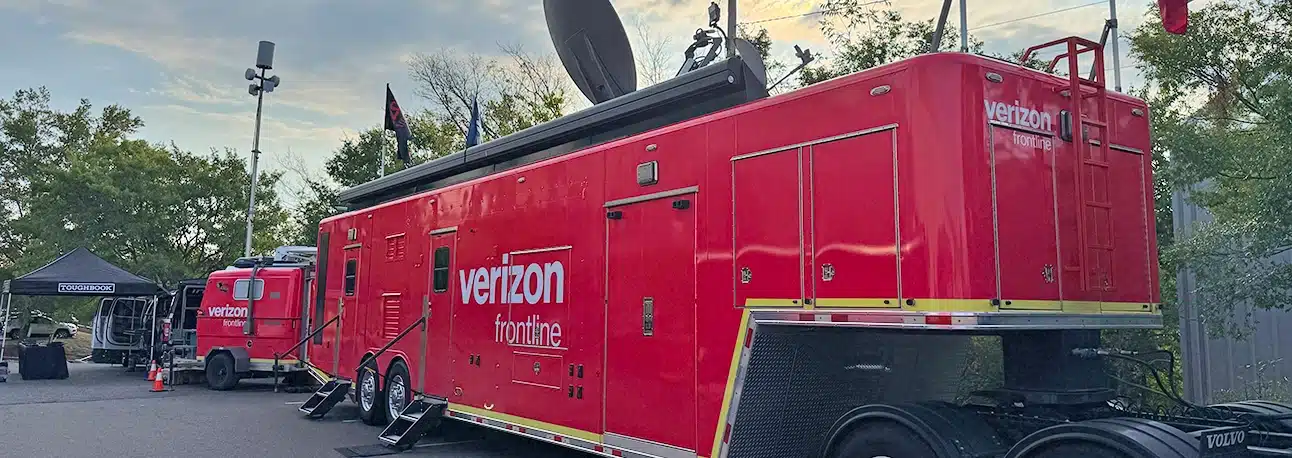
When a crisis strikes, effective response depends on more than reliable technology. It requires agencies, first responders and technology providers to work together seamlessly. Events such as the 2026 Central States Communications Exercise in Hot Springs, Arkansas, create a valuable environment to strengthen that coordination before it is needed in the field.
Rather than relying on demonstrations alone, the exercise gives participants hands-on experience with communications technologies in realistic scenarios. Local, state, tribal and federal agencies, along with nongovernmental organizations, can test capabilities, explore new approaches and learn from emergency communications professionals who have supported real-world incidents. Just as importantly, they can identify interoperability challenges across networks, equipment and operating procedures.
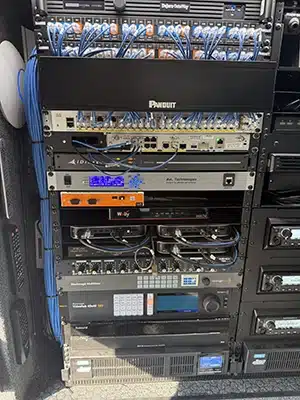 Verizon Frontline showcased a range of deployable assets designed to help restore and extend connectivity during emergencies – many of which were powered by ST Engineering iDirect technology.
- Accelerate on-site decisions: THOR delivers mobile private 5G, edge computing and command capabilities.
- Connect teams off grid: OXEN provides rugged communications in remote or damaged areas.
- Restore cellular coverage quickly: SPOTs extend service where terrestrial networks are unavailable.
- Keep communications resilient: Turtleback connects teams across multiple satellite orbits.
- Reach hard-to-access areas: Can-Am vehicles carry communications equipment off road.
- Adapt to any incident: Additional assets match connectivity to the terrain and mission.
ST Engineering iDirect’s Kris Jarrett, Regional Vice President for North America, joined the Verizon Frontline team and other technology partners on site. “Exercises like Central States give us a direct view into the operational needs of responders and invaluable real-time feedback from the people who depend on these systems when communications matter most. By bringing agencies and industry together in a practical training environment, we can turn technology into tested capability, strengthen interoperability and help emergency-response teams coordinate with greater speed and confidence.”