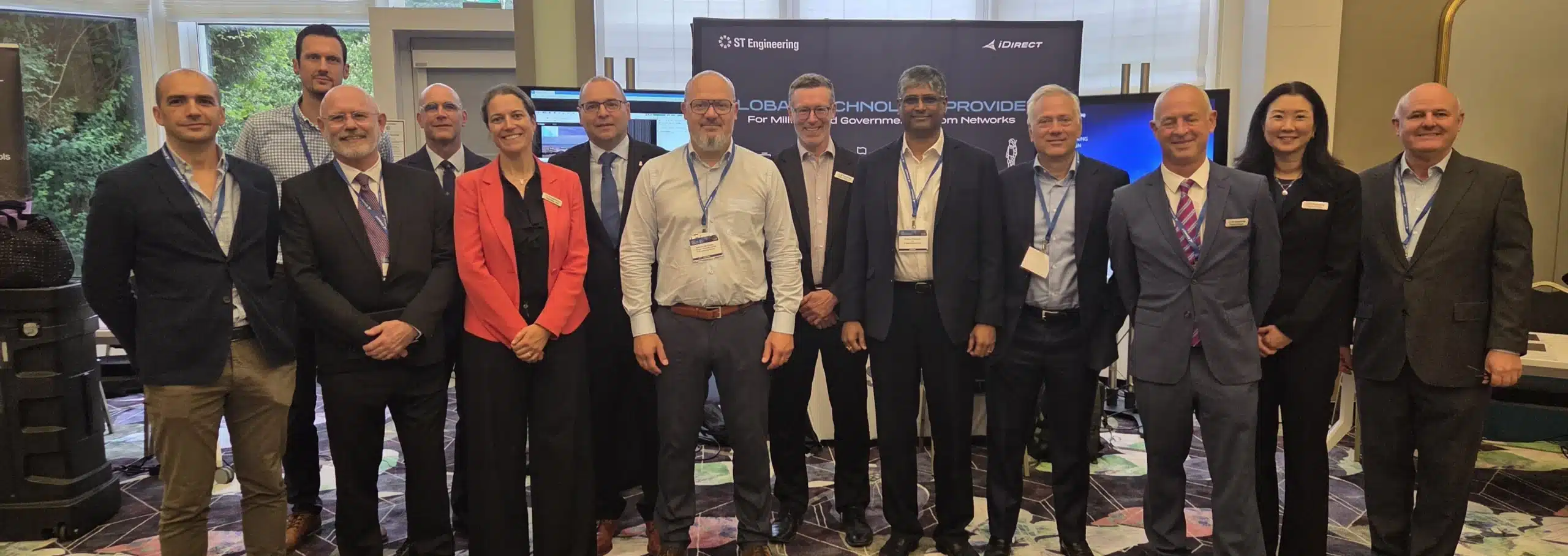
More than 100 MILSATCOM leaders gathered in Munich on June 10 as ST Engineering iDirect’s Global Government team hosted its biennial Defence Technology Day, bringing defence agencies, operators, integrators, and technology partners together around one urgent question: how can Europe build sovereign satellite communications that are resilient enough for today’s conflicts and adaptable enough for tomorrow’s threats?
Across keynotes, technical sessions, panels, and partner exhibits, the answer came through in a set of clear themes: resilience must be designed in from the start; sovereignty depends on both national control and European collaboration; and future defence networks must operate across contested, multi-domain environments.
The event also featured 12 exhibiting partners showcasing technologies and solutions that reflected the same priorities shaping the day’s discussions.

Resilience Is the Starting Point
Major Andrii Kovalchuk of the Armed Forces of Ukraine opened the discussion with a compelling battlefield perspective: modern SATCOM systems must be able to withstand cyberattacks, radio frequency interference, and physical infrastructure damage simultaneously.
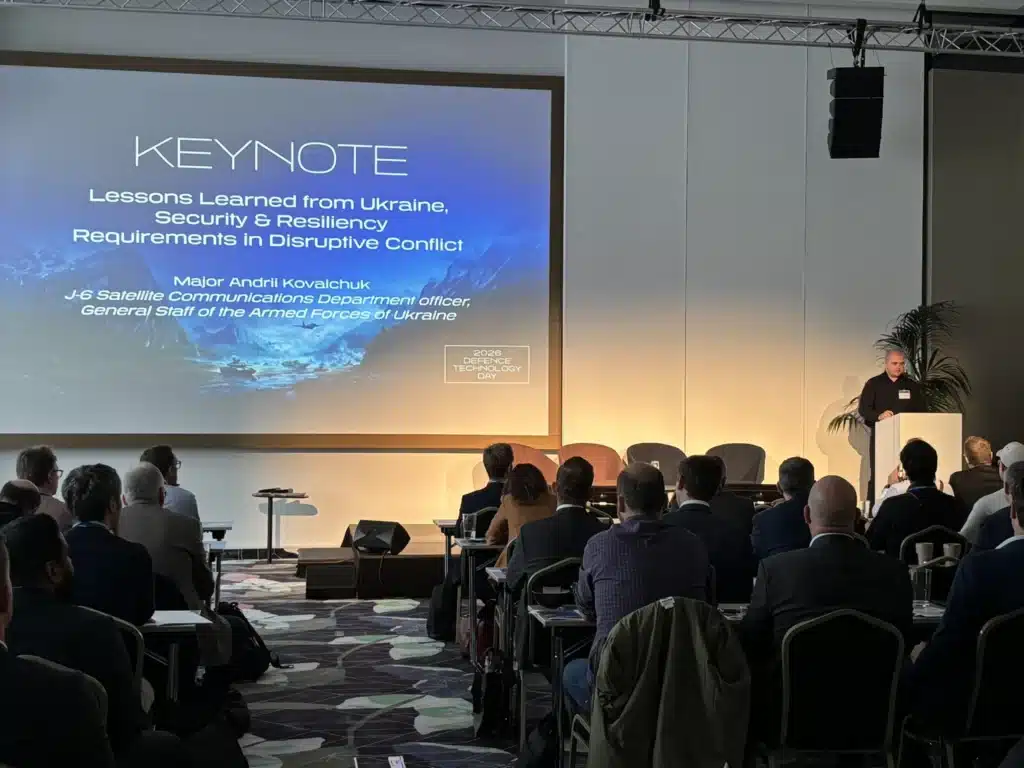
His keynote grounded the event in the realities of war and reinforced a point echoed throughout the day: resilience cannot be added later. It must be embedded into architectures, terminals, waveforms, operational planning, and procurement decisions from the beginning.
Sovereignty Means Control, Collaboration, and Adaptability
Sovereignty was not framed as isolation. Instead, speakers explored how nations can preserve control over critical communications while still working within a stronger, more unified European defence framework.
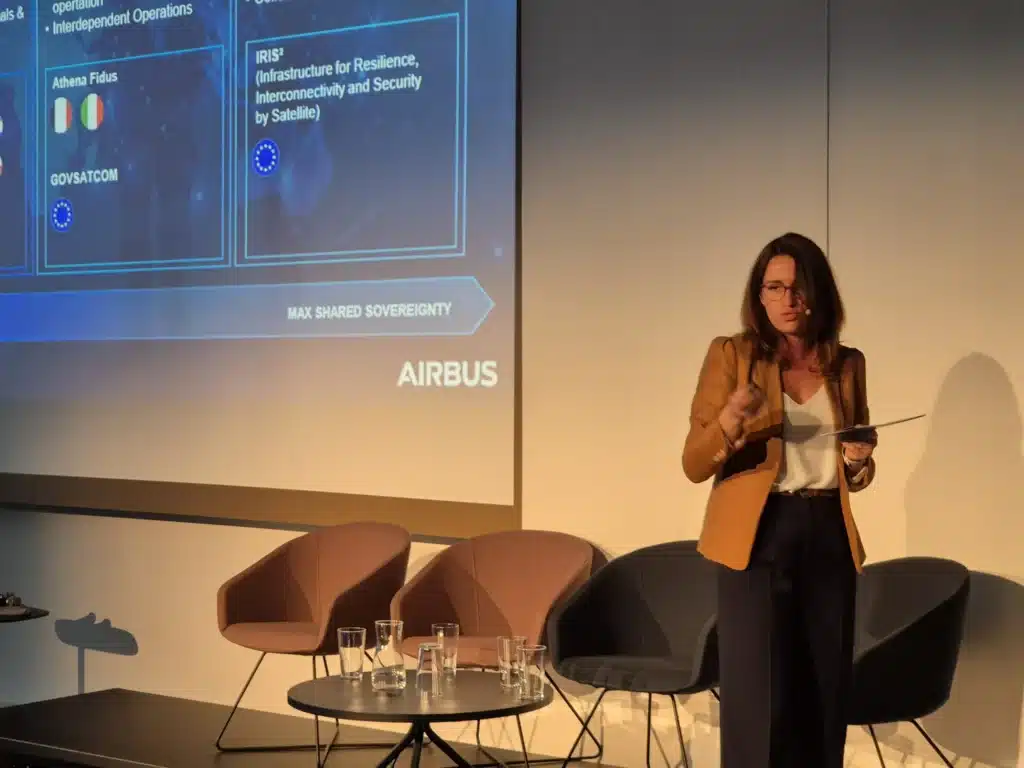
Sarah Casenove of Airbus set the strategic context by focusing on national sovereignty in a united Europe, while Keith Blanchet of ST Engineering iDirect aligned that ambition to the technical foundations of secure networks and protected waveforms. Together, these discussions underscored that sovereign defence depends on the ability to act independently when required, while still aligning around standards, interoperability, and shared innovation.
That balance also shaped the constellation discussion, where operators and stakeholders examined the tension between sovereign capabilities and common standards. Ultimately, sovereign programs must remain adaptable by design, because the threat environment will continue to change.
Future Networks Must Be Multi-Orbit, Multi-Domain, and Interoperable
The technology discussions pointed toward a more integrated defence communications future. Bert van der Linden of ST Engineering iDirect highlighted new SATCOM architectures and the growing role of 5G Non-Terrestrial Networks (NTN), then continued the conversation with Alvaro Sanchez of Integrasys in a fireside chat on how 5G NTN can translate standardization into operational advantage.
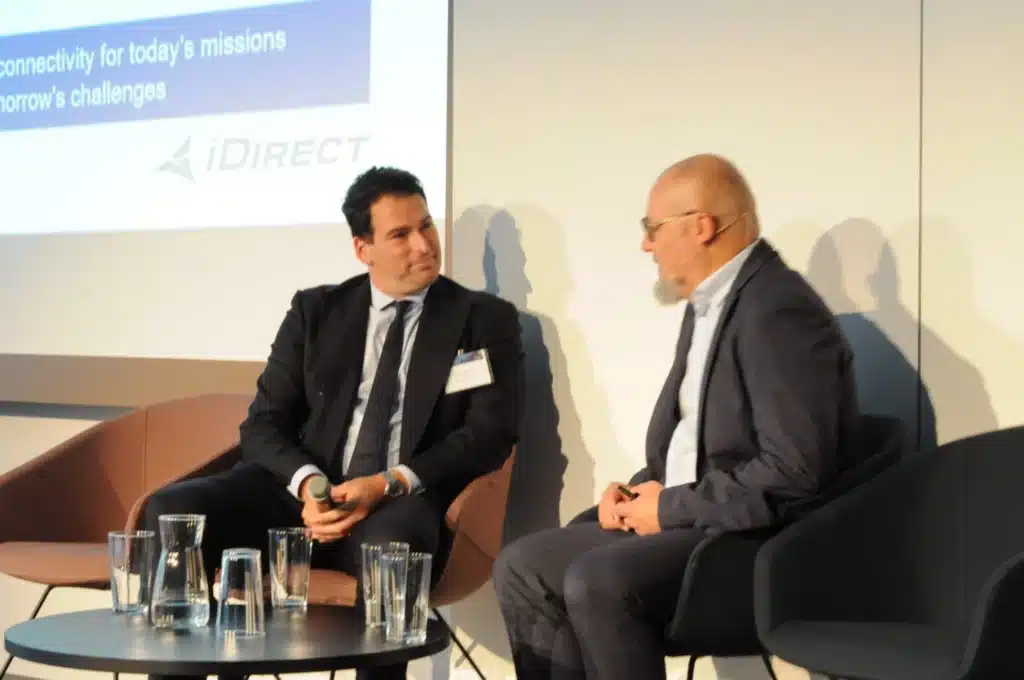
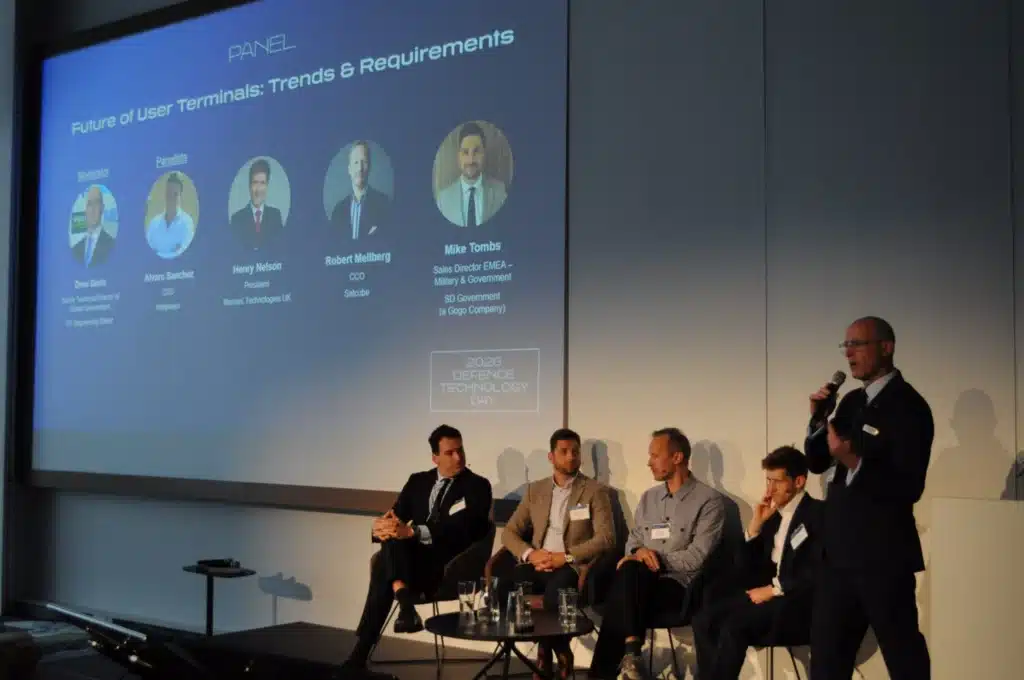
Panelists also emphasized the need for user terminals that can support multi-orbit operations, modular deployment, rugged environments, and evolving mission requirements. As defence users move across domains and threat conditions, seamless connectivity can no longer depend on a single network, orbit, or path.
This is where PACE planning becomes critical. Primary, Alternative, Contingency, and Emergency communications must extend beyond SATCOM alone, incorporating options such as UHF/VHF to strengthen operational resilience.
Scale and Speed Matter on Europe’s Eastern Flank
The conflict in Ukraine remained a defining reference point throughout the event. Discussions around eastern flank defence reinforced the need to deliver high-volume, high-quality, lower-cost SATCOM solutions quickly enough to meet urgent operational demands.
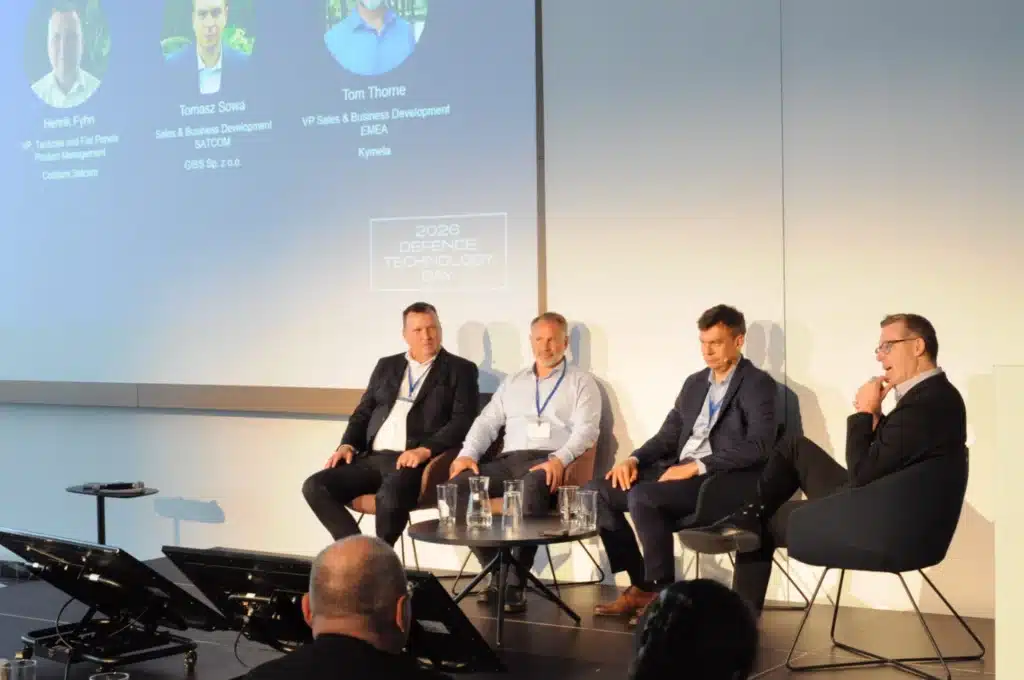
Speakers also pointed to emerging technologies, including drones, as both a threat and a tool. The takeaway for defence planners was not simply to add more capacity, but to build flexible, affordable, and rapidly deployable capabilities that can adapt as operational realities shift.
Dave Davis of ST Engineering iDirect connected these strategic priorities to advanced defence solutions designed to support deployed forces in exactly these kinds of contested environments.
Why Defence Technology Day Matters
Europe’s MILSATCOM community is facing a defining moment. The conversations in Munich made clear that sovereign defence requires more than national capability alone. It requires resilient architectures, interoperable standards, adaptable technologies, and collaboration across ministries of defence, agencies, NATO, operators, integrators, and industry partners.
The threats will continue to evolve. So must the strategies. Defence Technology Day helped turn urgent challenges into focused dialogue—and reinforced that building a resilient, sovereign European MILSATCOM future will take sustained coordination well beyond a single event.
Hear from our partners about the event:
- Sarah Casenove from Airbus on why events like iDirect Defence Tech Day are critical for sovereignty and the future of European defence.
- Åke Jonsson from Cobham Satcom on why it’s important to attend.
- Michael Tombs from SD Government talks about why these events are important.
- Per Anker from Danish Defence discusses security, AI and multi-domain innovation.
- Jack Van Der Heijden from EM Solutions Pty Ltd shared his key takeaways on the industry’s shared commitment to greater collaboration in support of the end user.